

I’ve been a pilot since I was five years old. I never thought I’d do anything else. Quitting has never been an option. To the younger me I would say: don’t give up, everything you fight for will be worth the effort, in the end. This is why it is important to tell our stories: to inspire, to show that we can succeed, and to use facts to remove the ground for prejudice.
Nina Gademan
Always in love with motorsport, she started racing at the age of five, inspired by watching her parents pursue go-karting as a hobby. Today, one of the most promising figures in motorsport, Nina Gademan has grown up between tracks and sacrifices and has tackled her races with modest means, often facing opponents with superior equipment.
After winning the Karting Slalom Cup at the 2019 FIA Motorsport Games, she explored endurance and esports before moving to single-seaters in British F4 in 2024, where she clinched podiums as a rookie. The turning point came in August 2024, when she participated as a Wild Card at the F1 Academy in Zandvoort, where she was the first to score points in that role, impressing those present with her charisma and solid driving skills in difficult conditions. Her talent and tenacity threw open wide the doors of the F1 Academy, where she now races full-time. Active on social media and as a content creator, Nina promotes gender equality in motorsport, demonstrating that talent has no boundaries, no labels.
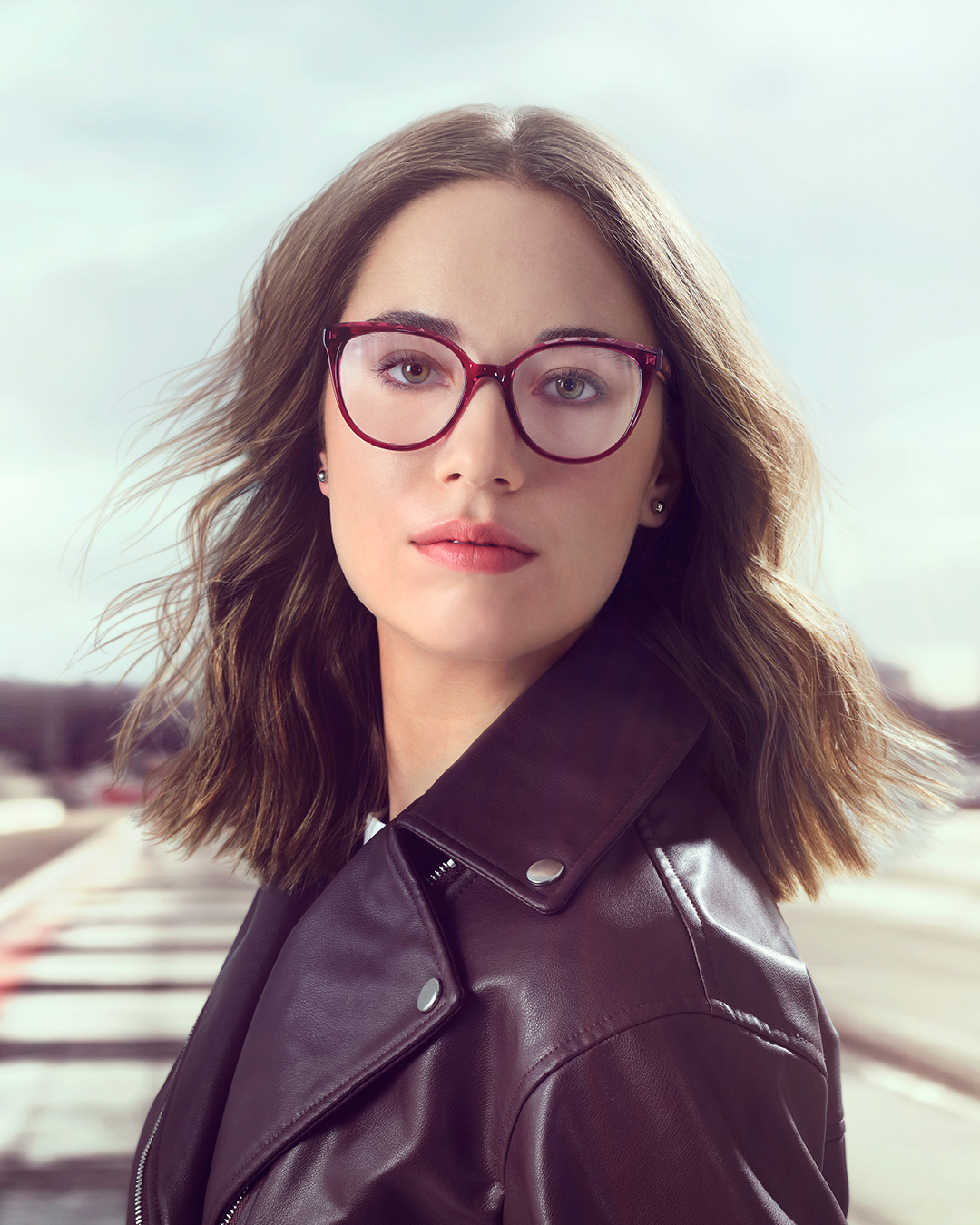

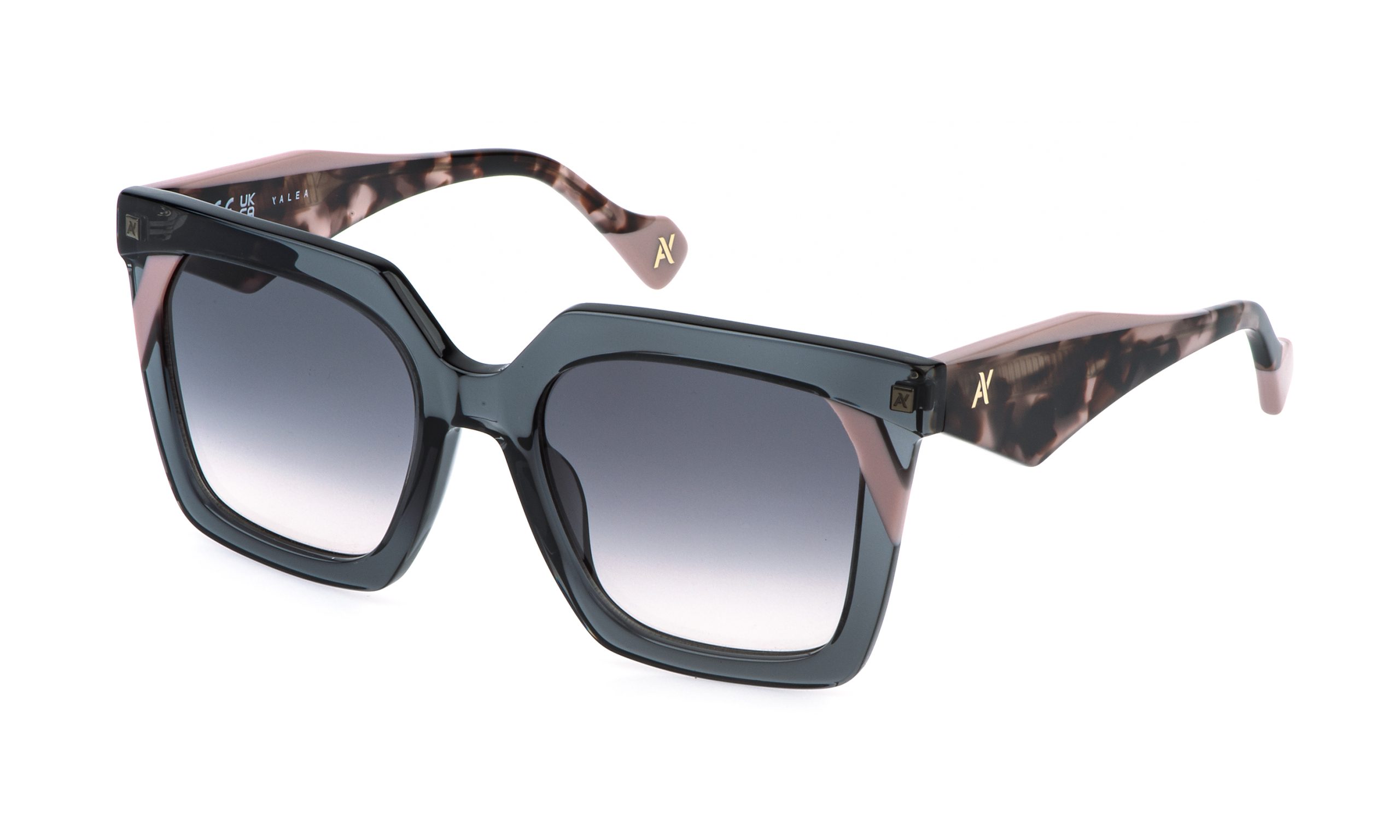
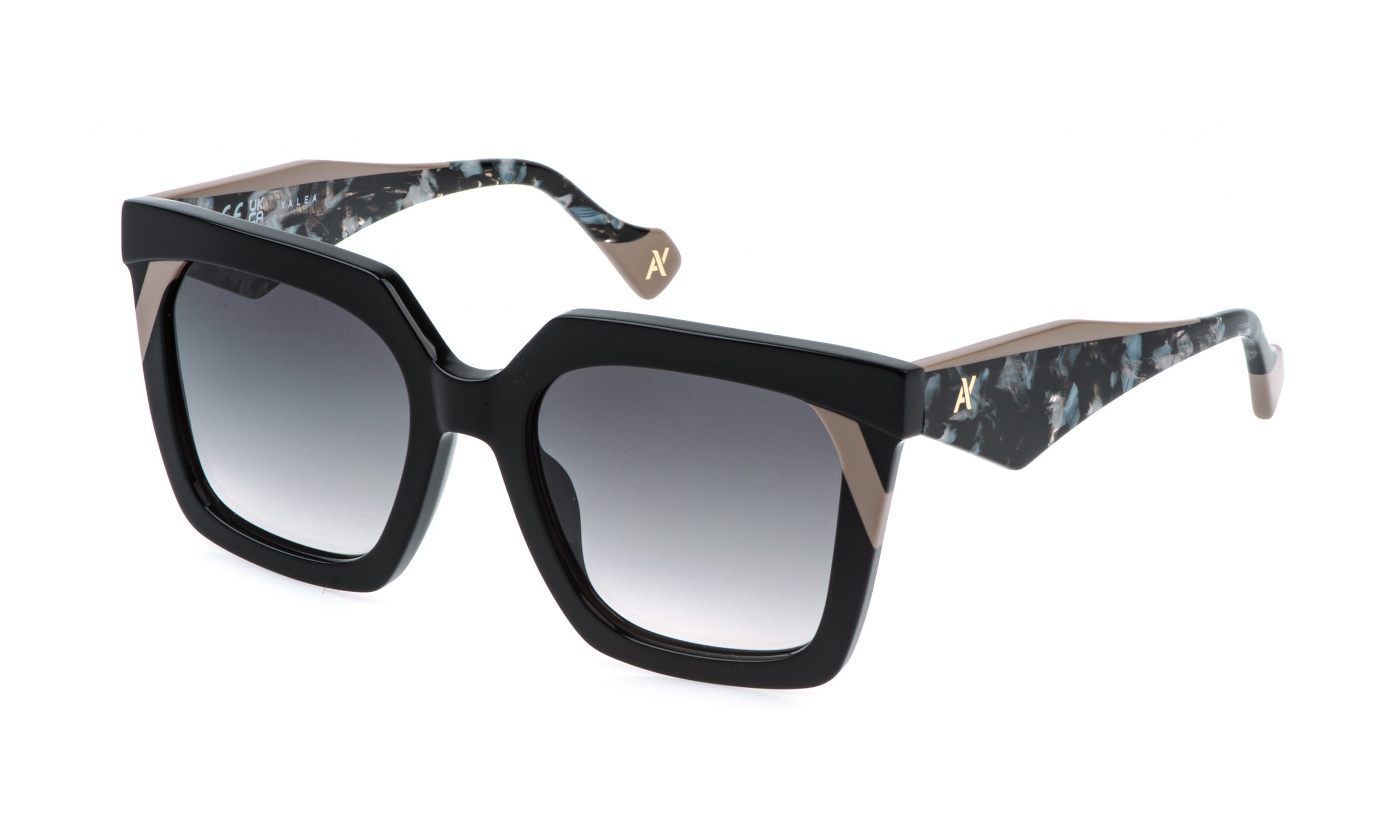
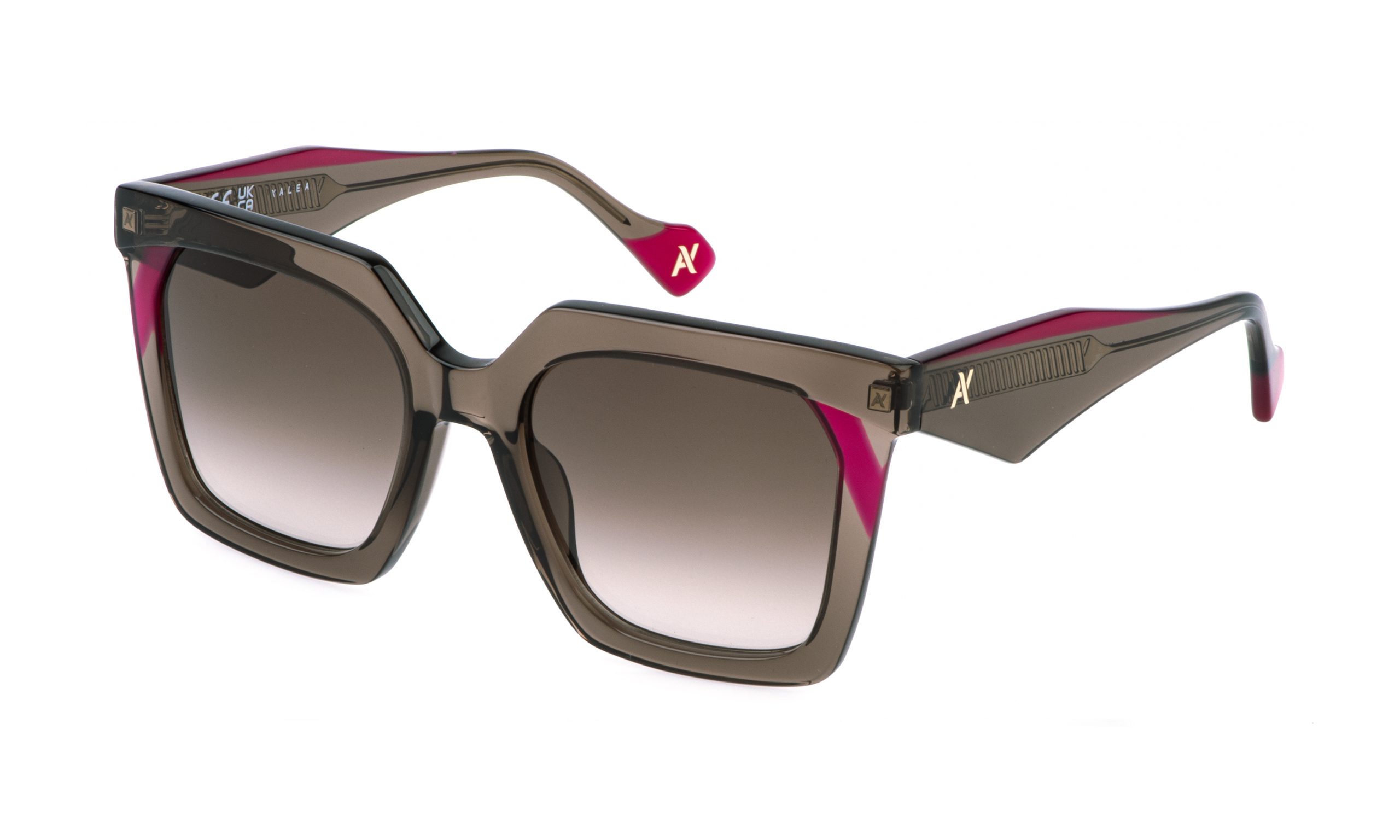
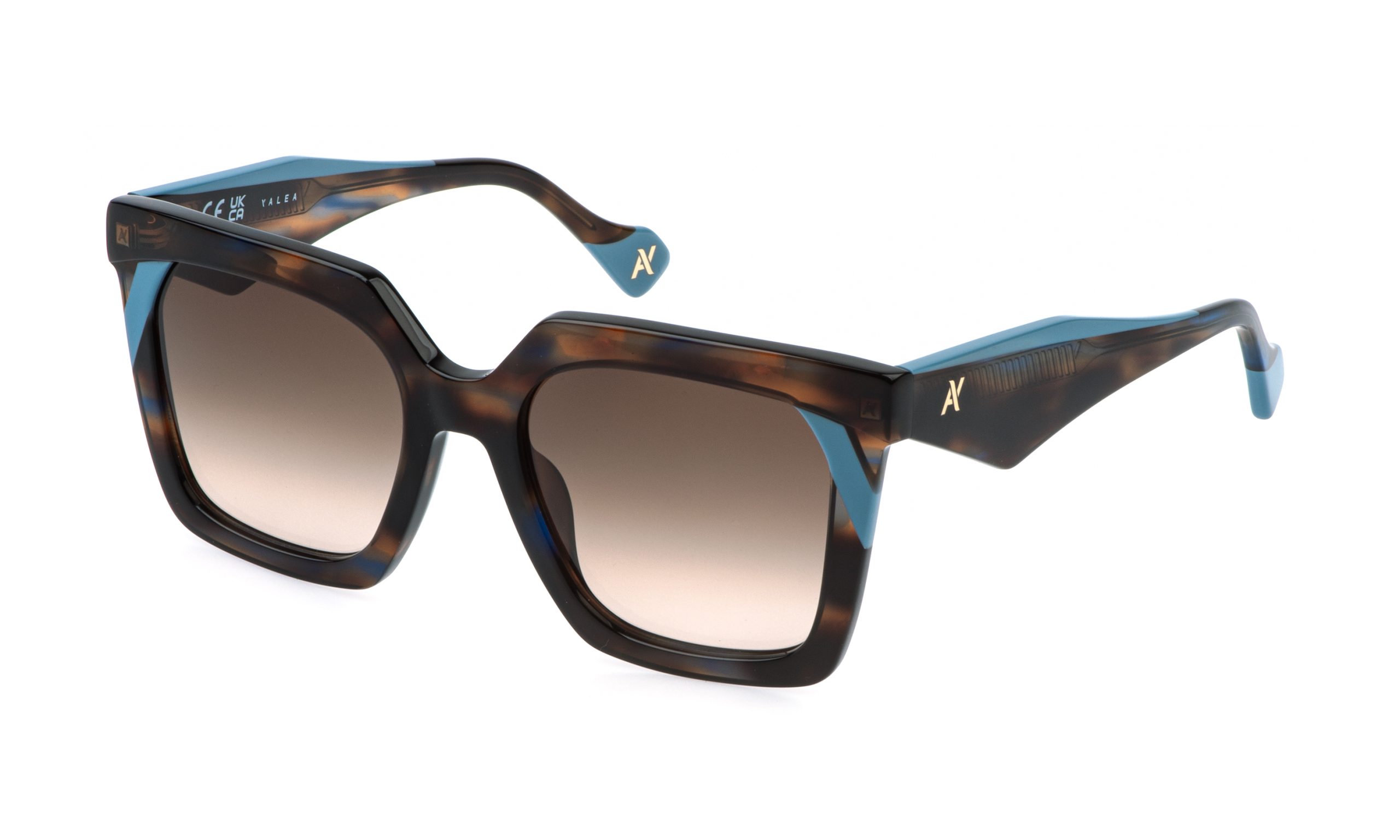
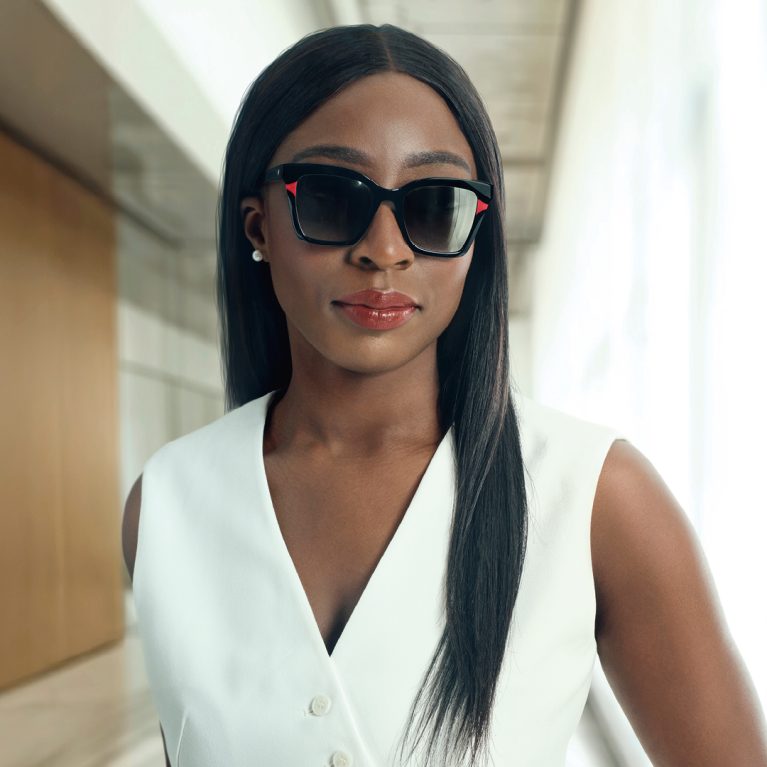
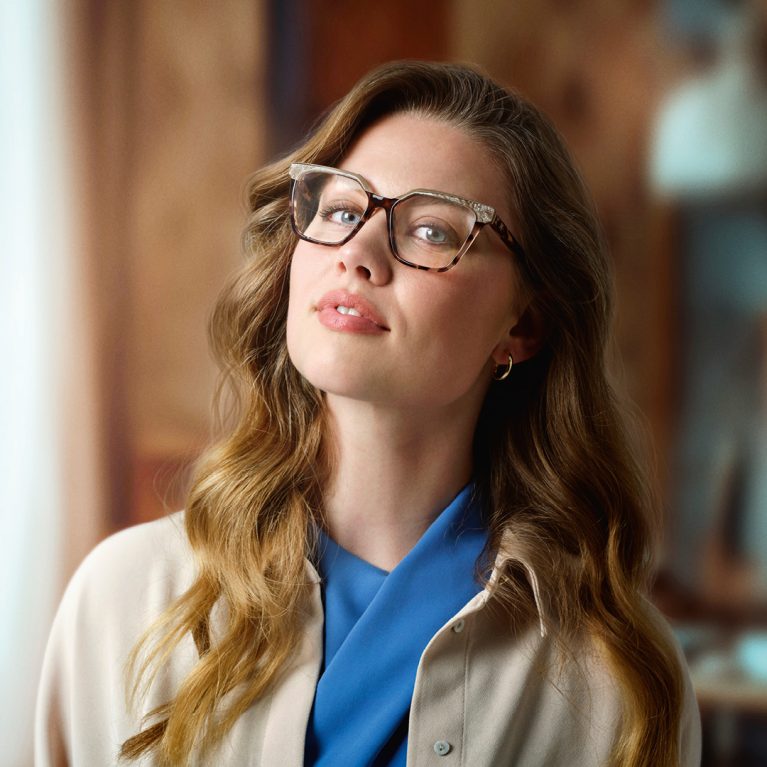
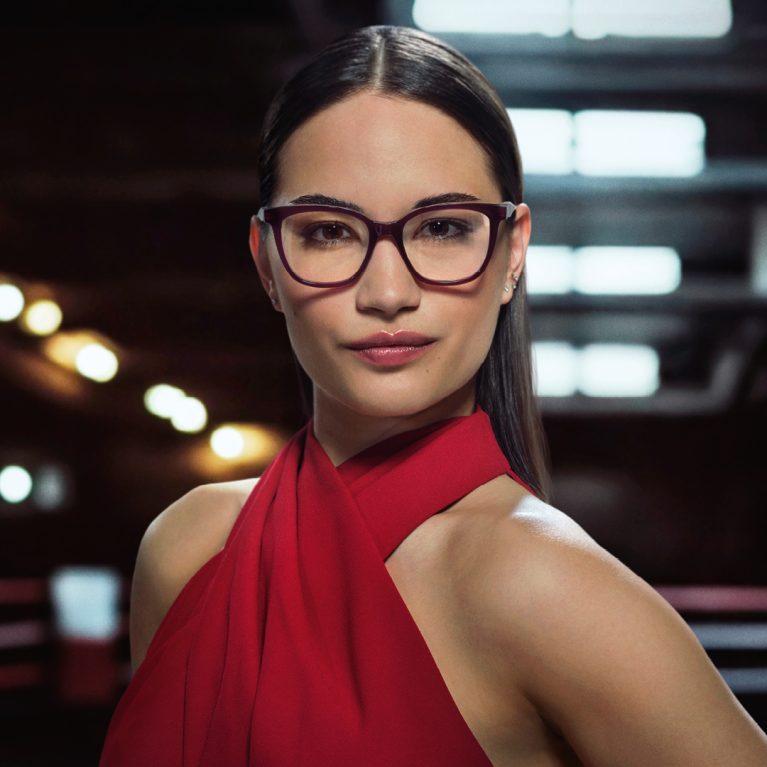
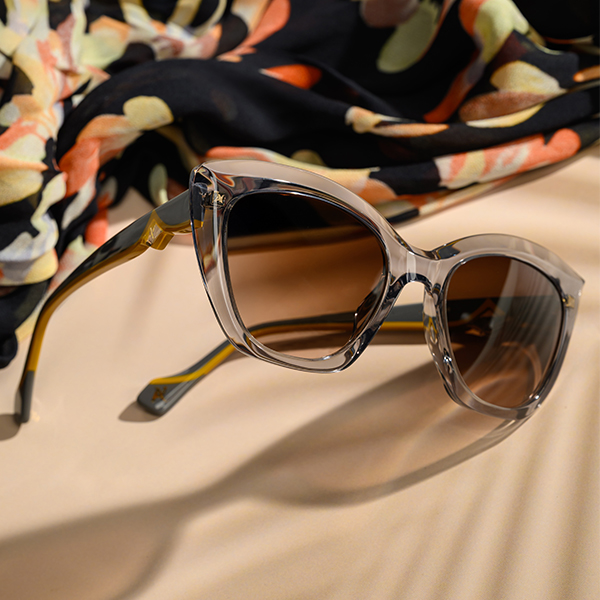
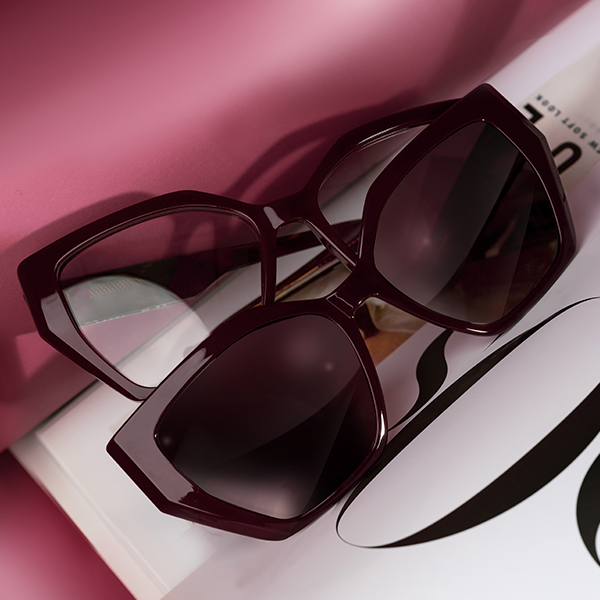
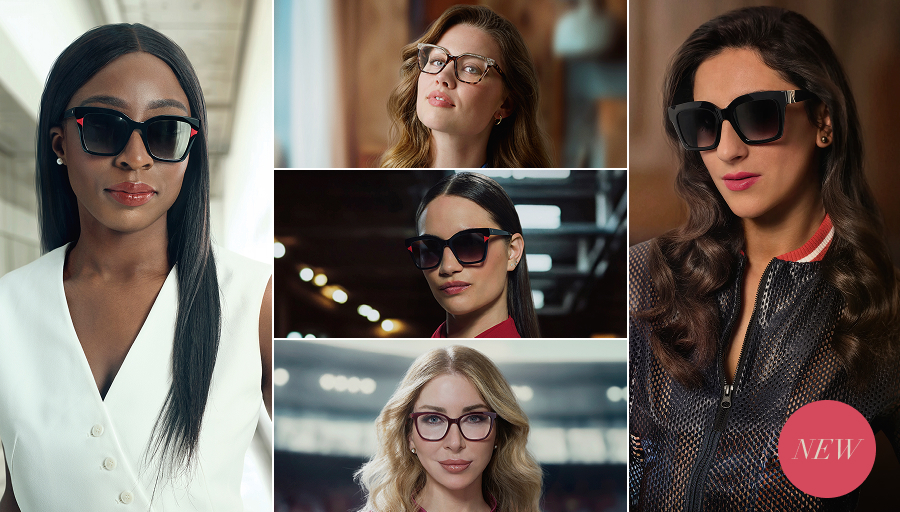
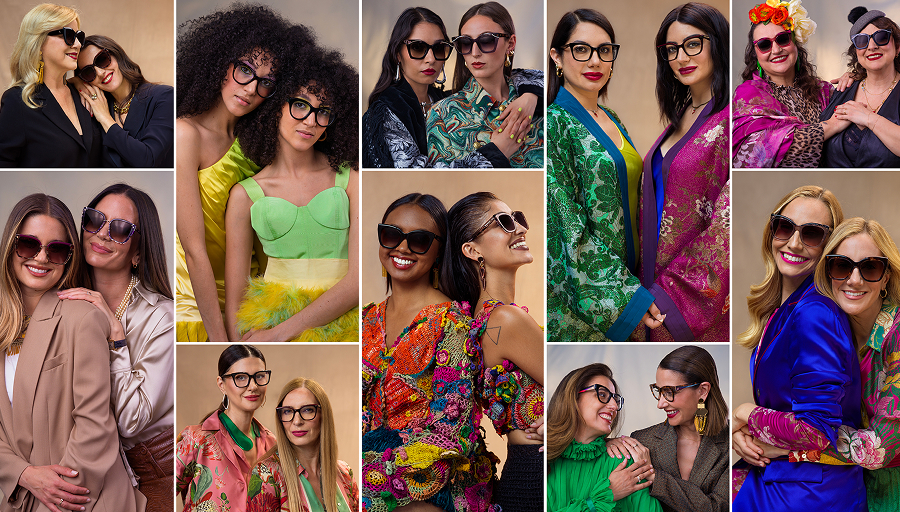
Nina Gademan for Yalea Eyewear
With this campaign, Yalea celebrates feminine empowerment in the professional world – a clear vision where form and substance coexist, inspiring fresh perspectives. A collection that invites you to break barriers and see beyond.
Nina, you are very young, yet during our meeting you stressed several times how important it is for you to send messages of inclusivity to the new generations and this impressed us very much, especially since it often seems, especially to those who are a few years older, that women today are already on a perfectly equal footing, in everything. Is that so?
“You know, I’ve been on the track since I was five years old and I’ve made progress thanks to my passion and my obstinacy, but it would have helped me to have had female models to look up to. I understand that, especially compared to the past, from the outside it may seem that today we already have everything, but “equality” cannot just be a slogan or a simple concept—it is something we encounter, or fail to encounter, every day in the paddock, in the words and attitudes of teammates, in the search for sponsors, and in the figures on contracts. We are not equal: I raced for years with second-hand vehicles while my colleagues had new material every weekend, because investing in a woman in motorsport is still a concept that most people reject.
But something is moving, I am seeing real progress: more girls on the track, more female engineers, more female mechanics, more opportunities for visibility. This is why I believe it is important that the new generations grow up seeing models of equality, so for them that scenario becomes normal: a woman in F1 will be normal, not exceptional.
In my heart, however, the real turning point will be when they stop making us compete in a separate category, because this leaves the belief that a female victory is worth less than a male one: only by drawing a direct comparison will there will no longer be doubts about talent, ability to gauge the track, psychological and – why not? even physical resistance.
When I tell my story in public it is not rhetoric: I speak about my struggles, about how I had to stop due to the lack of funds, and how I fought against subtle prejudices. I want to show girls that the track can be a home for them too, not a hostile territory to endure. This is the message I want to convey: equality is built with policies, resources and concrete reference models, not just with good intentions on their own.”
It’s not just about winning, it’s showing that you can do it
It is almost a mantra but consistently sharing evidence with the widest audience possible is the only way to gradually change prevailing mindsets. “My coach was really strict with me, he didn’t care that I was a girl, he treated me the same way as boys. And that was very important to me. However, not everyone is able to recognise your value rather than judge you by your appearance. Whispers, snide comments, sometimes even the refusal to let you try could make some believe that there are places that are not suitable for us. Only by proving that we can reach the top and do it exceptionally well can we change this mindset little by little.”
In fact, another thing that impressed us a lot during our chat is the role of social media in your story. Today you use them to tell people about your sport and share your vision of inclusivity, but during a challenging time in your life, you turned them into allies to find your way back into motorsport. Would you like to tell us about this?
“Yes, there was a terrible time for me, when I had to give up racing due to family problems and a lack of funds. It was really like ripping my heart out, I had to watch myself as I abandoned the thing I loved doing the most. But after the initial shock, I chose not to wait around for someone to decide for me. I took the simulator, started creating content, and turned my passion into a public project. Videos were not just entertainment: they were my way of showing my competence, personality and that human story that often gets left out.
My contents went viral because I told the truth: the hard work, the smiles, the training, the frustration. That story ignited a community, attracted the attention of the person who would later become my manager, and who convinced sponsors to invest.
Social media gave me back control over my story: I could continue to talk about what driving meant to me, show how I could hold the track, how I was preparing to come back and what it really meant to be a young driver today.
It was not a magic solution, but a strategic tool. And today I try to use the platform as a bridge between the paddock and the public, to continue to keep the level of attention high, telling my audience directly how I feel while I’m living my dream, without underselling my reputation. Social media has been an important proving ground for my desire to remain in this circuit and a powerful sounding board: thanks to it I got back behind the wheel, with more visibility, resources, and confidence. And I hope that this too can be a virtuous example.”
Today you are in great shape and you are getting great results. Now you have a solid awareness, but you have gone through criticism, moments of discouragement, fears. How did you deal with these and what did you learn? But more importantly, what do you hope from here on out for motorsport?
“Throughout the first part of my journey I was constantly worried, fear was a constant companion: fear of running out of money, of not having the right car, of not being enough. But I never let it win; I turned it into discipline, and in the end, I realised that the things we fear most are often the ones we care about the most. So there’s only one thing to do: go and do it! I have learned that true strength is not finding a way to avoid being afraid, but to use it as a guide to what matters most.
As far as criticism goes, it’s kind of the same thing. It is and will be impossible to stop it and sometimes it comes harder or for free because I am a woman. The kind that bothers me the most is when they devalue my results, claiming that the competition was weak or that I didn’t actually earn my achievements. It is not pleasant, but I do not allow them to really enter my mind, I never mix them with my being, with my identity. I don’t ignore the attack, but stay focused to improve.
There are mental patterns against which words are powerless, they would be used against us, again and again, to say that we complain, that we do not know how to stand the comparison, that we are too sensitive, too emotional. This is anything but true, but all we can do now, for the moment, is to hang on tight to the support of those who see our value, before they look at our sex, and win. And then win again.
My hope for motorsport is what I was saying before: I dream of real integration, mixed paths in the youth and professional stages, targeted funds for those who have talent but no resources, more women on the track, in technical and decision-making roles. I want to see girls who grow up thinking “I can race with the boys”, not “I only exist in a separate category”. I wish that the system will recognise the value of talent, wherever it is born, and that the track will become a truly open space.”